
My Summer as a Spreadsheet Ranger: Reflecting on Thin Places
(These views and words are my own, and do not reflect the views of NPS or the Park Institute.)
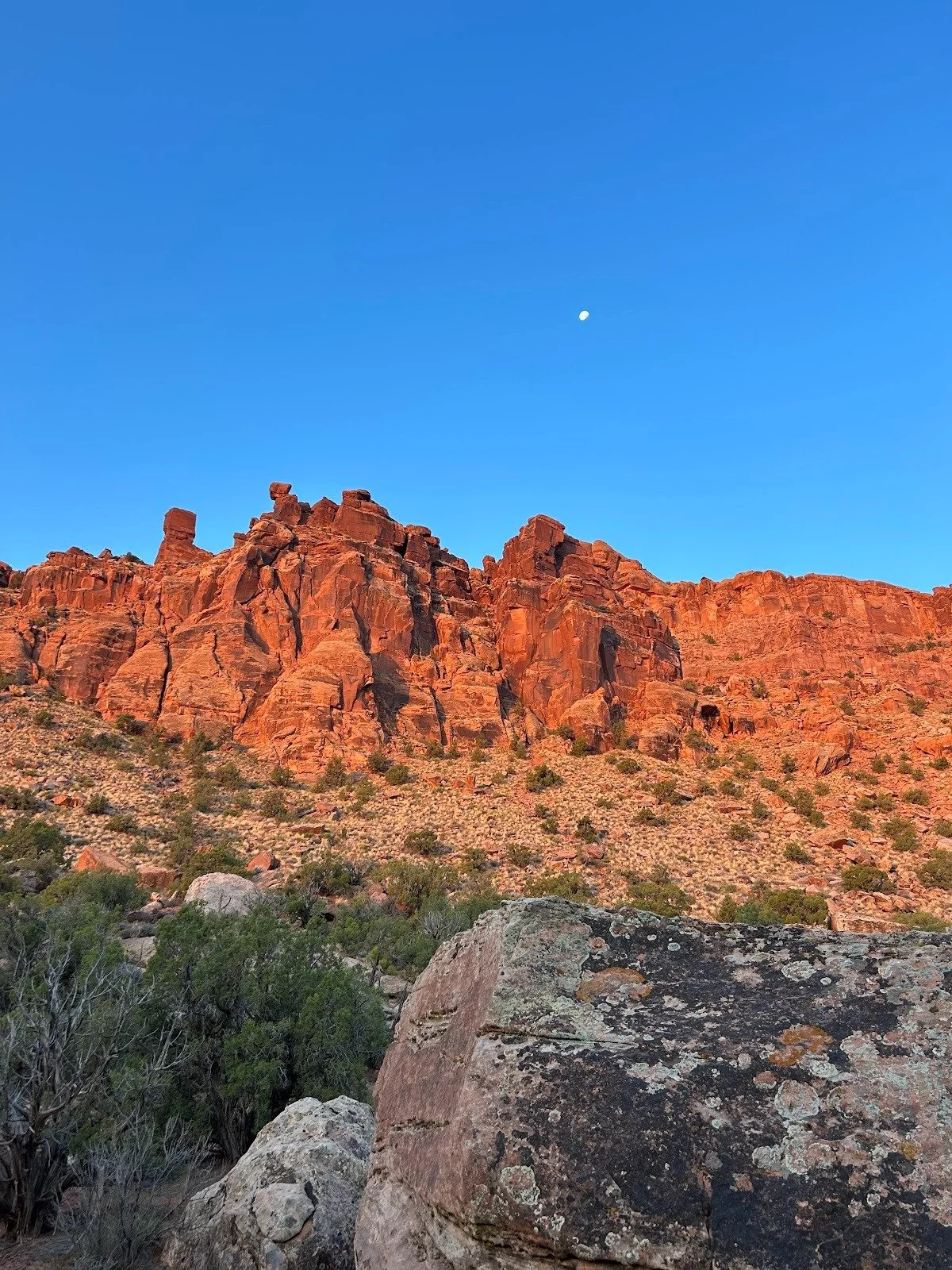
Hidden Valley Hike - Moab, UT
As the small plane bumped to a stop at the regional airport outside of Canyonlands National Park, I could see the heat radiating from the ground from my window seat. I gathered my bag, stepped off the plane, and was embraced by the dry and distinct heat of the Utah desert. I fell in love instantly. Those who have ventured or lived in Moab probably know what I mean.
There’s something special about the desert: its ecosystems, the muted rainbows painted on red rocks as the sun sets, the patches of green, and the people it attracts. The desert is not an easy place (and thank God for that). The isolation makes it freeing, and the small community all the more sweet.
I was working as a “Spreadsheet Ranger” – aka a data analyst – through the National Park Service’s Business Plan Internship (BPI). It was my job to analyze permit structures and visitation numbers to model different park financial scenarios. It was an honor to work with my supervisor, Rosa Tran, and under the leadership of the Superintendent, Lena Pace. Both displayed inspiring leadership while navigating a shifting regulatory and staff landscape.
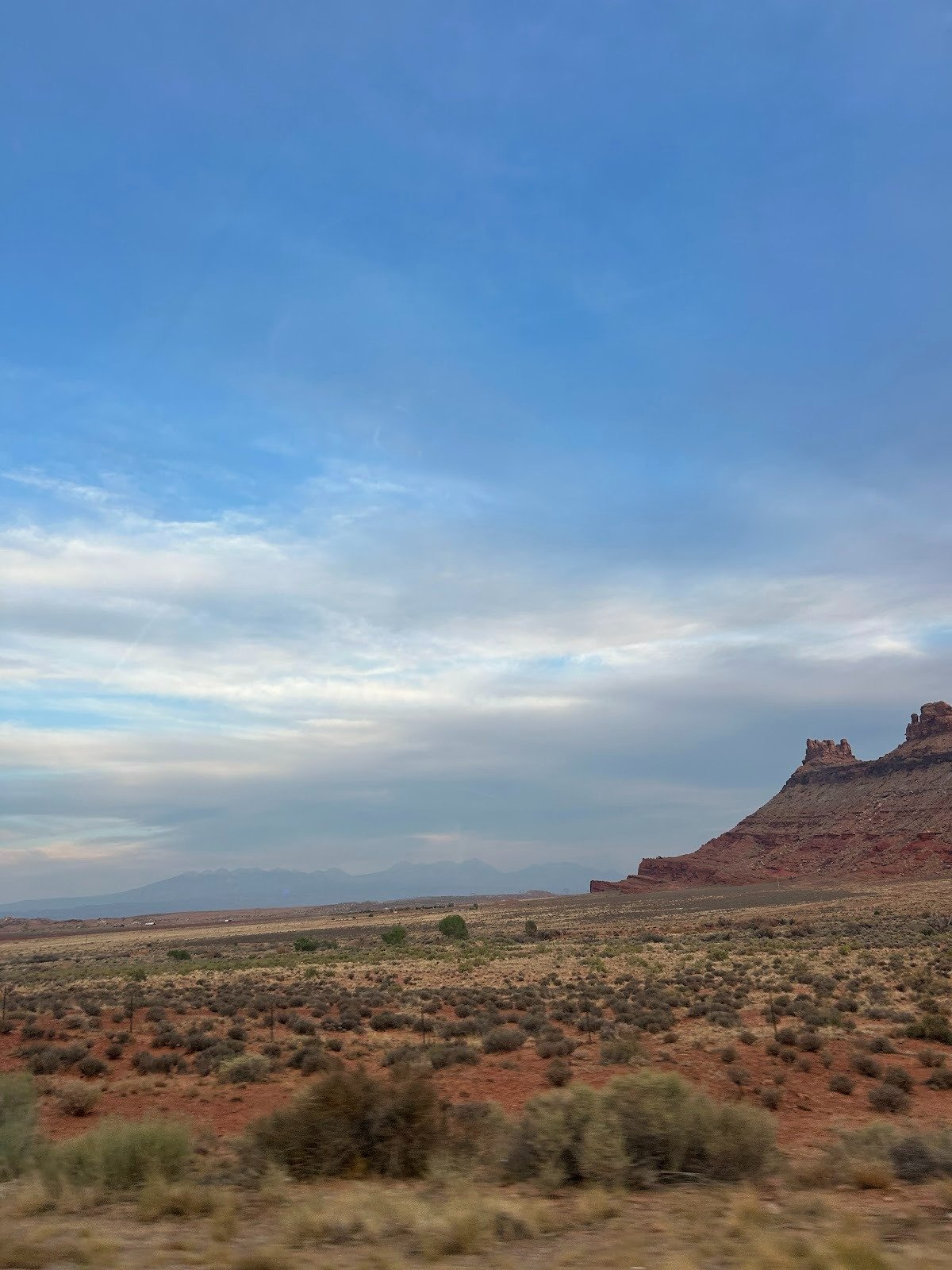
Driving through Canyonlands
Lucky for me, Rosa did not believe in my work being confined to a desk. Her passion for expanding outdoor recreation opportunities was inspiring. She sent me on a work trip down Cataract Canyon, a research trip via bike through the White Rim, and to numerous other areas in the park. I met many different park rangers and volunteer staff, and through these experiences, I changed a little bit.
In his book Underland, Robert Macfarlane describes “thin places”. In thin places, time tosses away its orderly rules - the past and the present become less linear and more intertwined. The area around Canyonlands National Park is a thin place. I felt time get the thinnest on Day 2 of our monitoring trip down Cataract Canyon. We stopped the boat and hiked up to a spot where pictographs showed two handprints next to an old dwelling. One large handprint, one small. I thought of when I was nine years old, and my dad poured concrete for a walkway outside our house. We made two handprints- one large, one small. I stood in silence, near that beautiful riverbank, and thought of the family whose land I stood on.
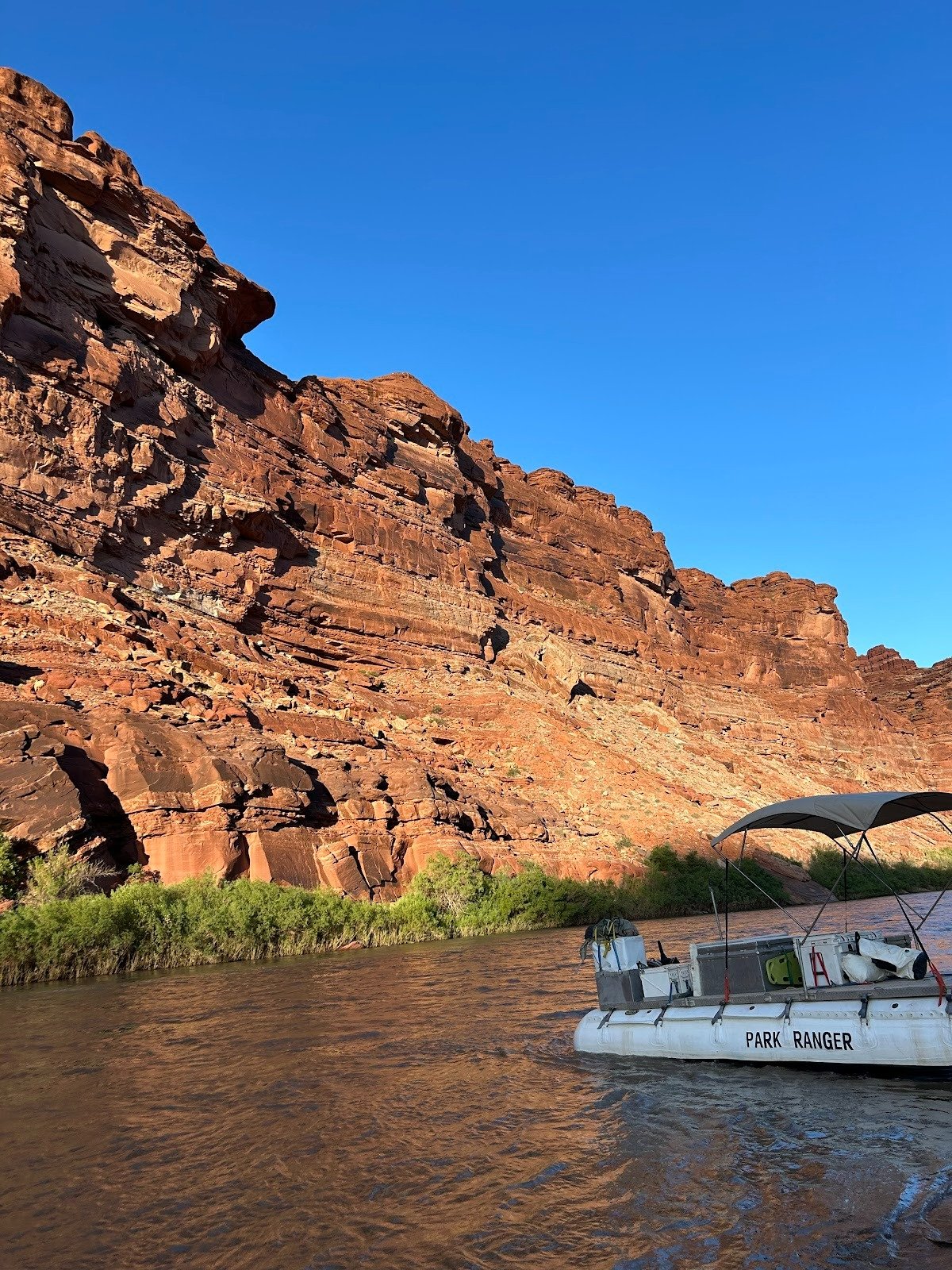
Day 1 of monitoring trip down Cataract Canyon
Native people who continue to reside in the Southeast Utah region have the most knowledge about these thin spaces, as their history in the region goes back thousands of years. There are 27 recognized tribes whose ancestral and traditional homelands include areas within Canyonlands National Park. Lena works with these groups to ensure sacred spaces, like the pictographs I saw in Cataract Canyon, are protected by and for Native peoples.
I learned a lot about the National Park Service by being a summer-intern-spreadsheet-ranger. Sure, I learned more about federal permitting, funding regulations, and financial modeling. I also learned about the incredible dedication of rangers and the many hoops they jump through to keep the parks running. I met leaders, characters, characters-who-were-leaders, and they inspired me with their dedication to making the parks the best they can be.
National parks are often described as timeless, but they are sustained by daily, deliberate work. That summer in Canyonlands taught me that preservation lives both in ancient handprints along a riverbank and in the quiet labor of people who care deeply for these thin places. The next time time loosens its grip on you in a park, remember that what feels eternal is made possible by the attention, intention, and care of Native peoples and park staff.