The Coharie Seed Swap: Community and Connection
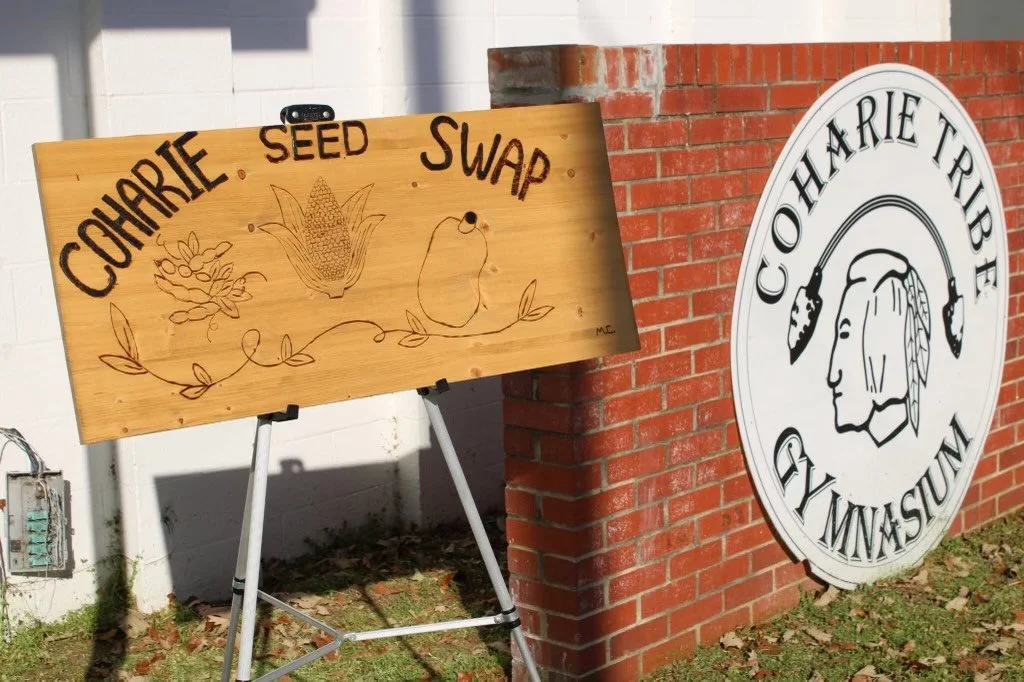
On March 14th, the Coharie Tribe hosted a seed swap at their tribal center in Clinton, NC. The event drew tribal members and neighbors from across Sampson County and surrounding areas, all interested in the seed swap’s goal of carrying on the long history of seed exchanging among tribes.
Tables lined the tribal center gym, each one offering a wide variety of seeds, including vegetables, fruits, wildflowers, herbs, and medicinal plants. Tribal organizations, church groups, nonprofits, state agencies, museums, libraries, and university groups all provided seeds and shared knowledge about gardening, pollinators, herbal remedies, and cultural practices.
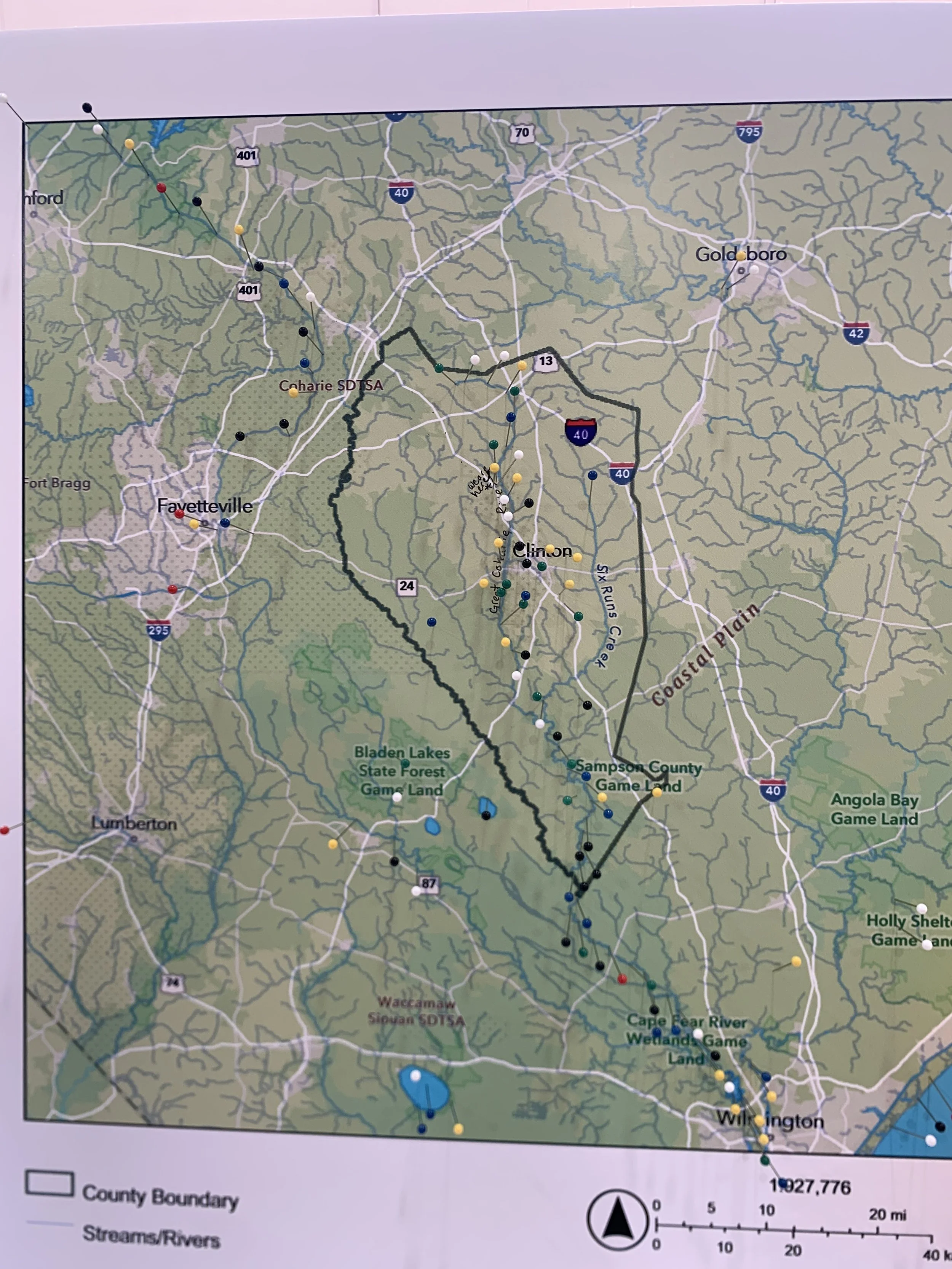
I was there representing the Park Institute of America as part of an outreach effort to the tribe and to build name recognition. In addition to handing out native wildflower seeds, we wanted to have an activity. We printed a foam poster board map of Sampson County and the surrounding area and asked one question: Where do you like to spend time outside? Then we handed people a pin. Some people knew right away where they were going to place their pin:
“In my yard on my swing under a big oak tree.”
“On the Great Coharie River.”
“Here! At the tribal center.”
I was there representing the Park Institute of America as part of an outreach effort to the tribe and to build name recognition. In addition to handing out native wildflower seeds, we wanted to have an activity. We printed a foam poster board map of Sampson County and the surrounding area and asked one question: Where do you like to spend time outside? Then we handed people a pin. Some people knew right away where they were going to place their pin:
It took others a bit more time to think, but everyone eventually settled on a location. The goal wasn’t just to map favorite places, it was to shift how we think about being outdoors. Spending time outside doesn’t have to happen in a designated park; it can be anywhere, even a front porch.
Towards the end of the event, one woman came up to the booth, and we struck up a conversation. I invited her to add her favorite spot to the map. She stared at it for a moment and said, “You know there is not one spot on the river that I don’t love!” She asked if she could add multiple pins to the map. Because the seed swap was about to end, I acquiesced, and she proceeded to fill the entire length of the Great Corharie River with pins. She sat there for a long time, methodically placing each pin. “You should have gotten red, yellow, black, and white pins,” she said, “for the medicine wheel.” Once she finished, she took a step back, “There, now there is not one part of the river not covered!”